
Saturday, 03 September 2011 01:27
THE BUZZ | ART
Defying deaf: Redefining a culture
by MARCUS BENIGNO
In Dancer in the Dark, the eccentric singer and actress Bjork plays the role of a single mother, whose deteriorating aural and visual senses spiral her into a heart-wrenching series of misfortunes. When it comes to the subject of the disabled, the silver screen often portrays a dreary world wrought with tragedy, hopelessness and self-pity.
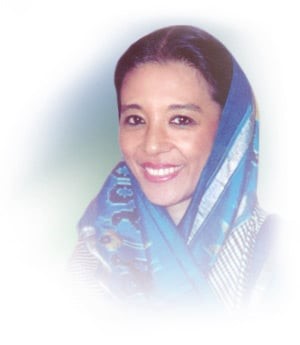
But for Sarah Giri, chairperson of Nepali Deaf Arts Society (NDACS), the terms 'deaf disability' and 'hearing-impaired' are misnomers, outdated and defunct.
The patron of Deaf (capital 'D') arts and culture has been working since 2002, spreading awareness about the deaf community not as a handicapped group but as a marginalized people that espouses its own language and customs and tackles distinct struggles and social formations.
"The deaf have come a long way throughout history," Giri asserts. "Not because of, but in spite of what Helen Keller said, that blindness can separate you from things, but deafness separates you from people."
I met Giri and two members of her Deaf dance troupe, Jamuna Dahal and Anita Prajapati, at a rehearsal for the debut of Eyes Empowered Part II, a weeklong exhibition of Deaf art at the Summit Hotel.
Instructing the girls in mid-dance, Giri signed as she allowed her fingers to collapse into fists only then to open and freeze in momentary forms. Instantly, the dancers took heed, adjusted their footing and continued to cha-cha across the floor. The two girls performed remarkably in sync despite the absent beats.
As I gathered from their gestures in between sets, Dahal and Prajapati critiqued their routine. I watched as their hands danced within the quadrangular space above their diaphragms and their faces expressed intelligible emotion. It is not that I had never seen a person sign before. But I had never felt so speechless (in its most literal sense). All my hands could muster were a few broken letters that I had learned in primary school: "I-A-M-M-A-R-C-U-S," and I am illiterate in Deaf.
To accommodate my impediment, they took out their phones, and we began to converse through SMS drafts. Exchanging mobiles, I learned their names and their ages (both 22) and delved into small talk as social etiquette dictates.
Their performance compliments the NDACS exhibition on Deaf art and culture, with which Giri identifies whole-heartedly. Giri, a hearing person herself, started her Deaf education in 2002 in Bangalore. And ever since, she has become fluent in sign and has facilitated workshops on dance and art for the deaf in South Asia.
"So many of my deaf friends in India are successful professionals as architects, web designers and accountants. We haven't reached that level in Nepal. But it's important to dream and work and remember, " she says.
Giri's latest project, Eyes Empowered Part II, features paintings by Deaf Nepali and Indian artists, who draw the Deaf perspective in celebration of Deafness and/or in resistance of the predominantly hearing world. The event hopes to illuminate the hearing majority of Nepal to the rich heritage and pastiche of Deaf culture.
In "Also Sun Flowers!" by Deaf artist Rasmi Amatya, eyes superimposed on sunflowers gaze at the life-giving sun, representing the beauty present in the voiceless journeys of both the deaf and the sunflower.
Likewise, Deaf artist Anirban Das Gupta's painting "Eyes Empowered" magnifies the all-seeing eye and conveys the life channel of the deaf. Giri captions piece: "It's an eye that hears, absorbing messages unheard, unsaid."