
Sarah Giri
Monday, 30 May 2011 11:54
In John Howard Griffin's Black Like Me, the white journalist describes his experience traveling through the segregated American South of the 1960s, disguised as a Black man. Griffin intentionally darkened his skin to a passable shade and documented his experiences in a novel that would eventually draw white America's attention to the struggles faced by marginalized African Americans.
Sarah Giri of the Nepal Deaf Art and Culture Society (NDACS) identifies herself as 'culturally Deaf'. For the past nine years, she has worked to raise awareness about the deaf community in South Asia. NDACS will host Eyes Empowered Part II, a weeklong exhibition of Deaf Art by Nepali and Indian deaf artists, commencing with a soirée on June 3, sponsored by the Summit Hotel.
NDACS provides a platform for the deaf community, operating not as a charity for a disability group but as a repository of a culture complete with its own history, values, and, most importantly, language.
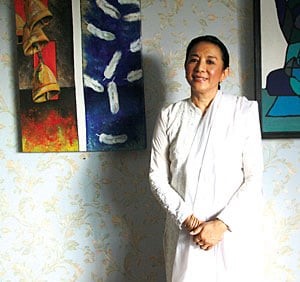
"Language and literacy are prerequisites of a culture," Giri says as she demonstrates her fluency in sign language. "With deaf language came Deaf (capital 'D') culture and heritage. The hearing world is written on board surfaces, while the deaf write in space. Throughout history, groups whose rights and privileges have been denied have come together to voice their experiences through art."
Under the genre of 'disenfranchised art,' there are two categories: affirmation art and resistance art. Giri explains, "The first is about validation and celebration, where 'I'm deaf, and so what? This is a wonderful world, and this is our culture.' The second addresses the oppression and segregation from the dominant hearing culture and its portrayal in their suppression."
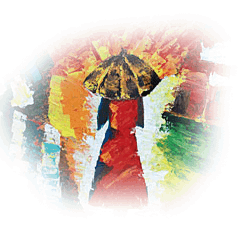
Deaf subalternity involves a paradox of isolation and dependency, where even the closest kin can seem distant and estranged. "The Lonely Walk" by Deaf artist Anirban Das Gupta depicts a bright image of a woman walking alone, symbolizing the detachment and poignant optimism of deaf individuals in a predominantly hearing world.
Work opportunities for deaf Nepalis are scarce and limited. Since 1997, Shyam Kakshapati's Bakery Café has employed dozens of deaf individuals in Kathmandu. However, Nepal should aim for more.
"The deaf are succeeding through their studies in high school and college, but the only avenues they see are as waiters, data entry workers, or sign language instructors. While these opportunities provide for basic needs, they are limited and can become demotivating," says Giri.
In addition to its art workshops and cultural events, NDACS challenges corporations to invest in the potential of deaf individuals as web developers, designers, architects, and accountants.
In a second work, Das Gupta portrays the deaf perspective as an invisible minority. Giri captions the piece: "The whole world sleeps in silence, undisturbed. While under a lit corner, a group of deaf individuals are signing. All they need to communicate is a little moonlight."
Eyes Empowered Part II, NDACS' 2nd Annual Deaf Art Exhibition, will be held at the Summit Hotel from June 3 to 10.